
How is your baby growing at 9 weeks?
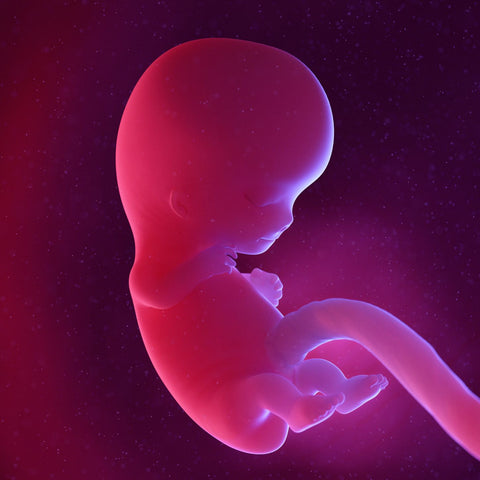
Your baby’s face is becoming more recognisable. The eyelids have formed, there’s a small mouth, and the tongue already has early taste buds.
Hands and feet are forming, with grooves where the fingers and toes will grow. The heart, brain, lungs, kidneys and gut are all developing, and bones are beginning to form.
The genitals have started to form, but your baby’s sex usually can’t be seen until the mid-pregnancy scan at 18 to 21 weeks.
What happens at 9 weeks?
If you haven’t had your booking appointment yet, it should be soon. If you haven’t heard anything, contact your local maternity service, as some blood tests are best done by 10 weeks.
At booking, you’ll be offered blood tests to check your blood group and iron levels and to screen for HIV, hepatitis B and syphilis, so any treatment can start early. You’ll also be offered screening for sickle cell and thalassaemia.
It’s a good time to think about whether you’d like screening for Down’s, Edwards’ and Patau’s syndromes at your dating scan. It’s your choice, and your midwife can explain what it involves.
What symptoms might you have at 9 weeks?
Levels of the pregnancy hormone hCG peak around now, and you may still feel sick and very tired. Many people start to feel better in the second trimester, from about 13 weeks, though sickness can last until around 16 to 20 weeks.
Your breasts are probably getting bigger, and your waist may be starting to thicken. Mood swings are common too, so rest when you can and accept offers of help.
Call your midwife, GP or NHS 111 if you can’t keep food or drink down for 24 hours, your pee is very dark or you haven’t peed for 8 hours, you feel weak, dizzy or faint when you stand up, or you’re being sick and also have tummy pain, a high temperature, blood in your sick or weight loss.
Bleeding isn’t always serious, but get it checked straight away, and any pain low down on one side of your tummy. Call your maternity unit or early pregnancy unit, or NHS 111 if you can’t reach them.
Call 999 if bleeding is heavy (soaking a pad soon after you put it on), or comes with severe tummy or shoulder pain, or with feeling sick, faint or dizzy. If you have sudden, severe tummy pain and feel faint or dizzy, call 999 even if you’re not bleeding.