
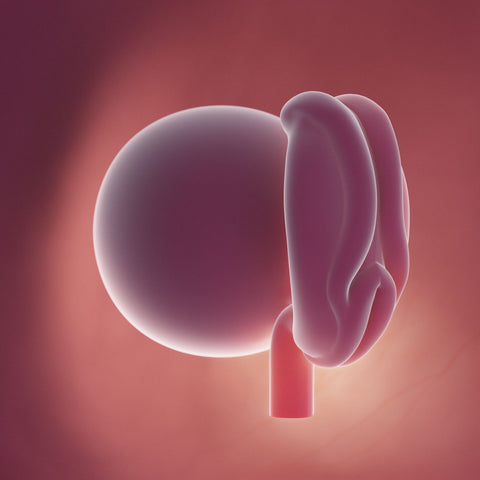
How is your baby growing at 4 weeks?
At 4 weeks, your baby is an embryo, growing quickly in the lining of your womb. It sits inside the amniotic sac, which fills with fluid to cushion it, and a tiny yolk sac feeds it for now.
The outer layer of cells will go on to form the placenta, which will later pass oxygen and nutrients to your baby and carry waste away.
What happens at 4 weeks?
This is around when your period would be due, and some home tests can already pick up a pregnancy. Pregnancy is counted from the first day of your last period, not from conception, so you’re already 4 weeks pregnant even though you probably conceived only about 2 weeks ago.
Once you know, you can refer yourself to your local maternity service or contact your GP surgery. Your first midwife appointment should ideally be by 10 weeks.
Take 400 micrograms of folic acid a day until 12 weeks, and 10 micrograms of vitamin D a day. Ask your GP about a higher 5mg dose of folic acid if you have diabetes, sickle cell or thalassaemia, take medicine for epilepsy or HIV, or there’s a history of neural tube defects such as spina bifida in your family, the baby’s father’s family or a previous pregnancy.
Avoid alcohol, stop smoking and cut down on caffeine. If you take regular medicine, don’t stop it before talking to your GP.
What symptoms might you have at 4 weeks?
You might not feel any different yet, apart from a missed period. Some people notice early signs straight away and others notice none. Both are normal.
Early signs can include sore breasts, tiredness, feeling sick, needing to pee more often, a metallic taste and going off foods you usually enjoy.
Light spotting can happen as the embryo attaches to your womb, but get any bleeding checked straight away, and any pain low down on one side of your tummy or in the tip of your shoulder, which can be signs of an ectopic pregnancy (a pregnancy growing outside the womb). Contact an early pregnancy unit or your maternity unit, or call NHS 111 if you can’t reach them.
Call 999 if bleeding is heavy (soaking a pad soon after you put it on), or comes with severe tummy or shoulder pain, or with feeling sick, faint or dizzy. If you have sudden, severe tummy pain and feel faint or dizzy, call 999 even if you’re not bleeding.