
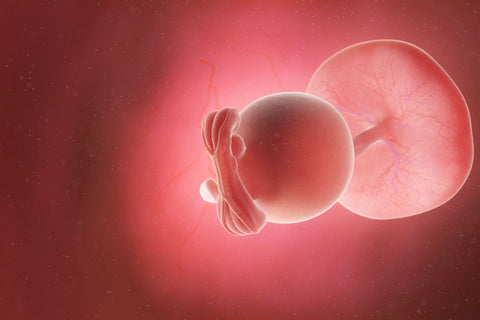
How is your baby growing at 5 weeks?
Your baby’s brain and spinal cord are forming fast this week from the neural tube, which is one reason folic acid matters so much now.
Your baby’s heart is taking shape, and its very first beats may happen around now. Your baby has some blood vessels of their own, which will form part of the umbilical cord.
The face is beginning to take shape, and the placenta is starting to develop.
What happens at 5 weeks?
If you haven’t already, contact your local maternity service or GP surgery to start your pregnancy care. In most areas you can refer yourself online.
Your booking appointment with a midwife should ideally be by 10 weeks, as some blood tests, such as sickle cell and thalassaemia screening, are best done before then.
You won’t usually have a scan yet. The first routine scan, the dating scan, is between 10 and 14 weeks. If you have bleeding or pain, you may be offered a scan sooner.
What symptoms might you have at 5 weeks?
Many people find out they’re pregnant around now, often because their period is late. Tiredness can hit hard in these first weeks, and your breasts may feel sore.
You might feel sick at any time of day, need to pee more often, notice a metallic taste or find some smells hard to bear. Mood swings and anxiety are common too. If worry is getting on top of you, talk to your midwife or GP.
Light bleeding can be mistaken for a period, and some people spot a little as the embryo attaches to the womb. Get any bleeding checked straight away, and any pain low down on one side of your tummy or in the tip of your shoulder, which can be signs of an ectopic pregnancy (a pregnancy outside the womb). Contact an early pregnancy unit or your maternity unit, or call NHS 111 if you can’t reach them.
Call 999 if bleeding is heavy (soaking a pad soon after you put it on), or comes with severe tummy or shoulder pain, or with feeling sick, faint or dizzy. If you have sudden, severe tummy pain and feel faint or dizzy, call 999 even if you’re not bleeding.