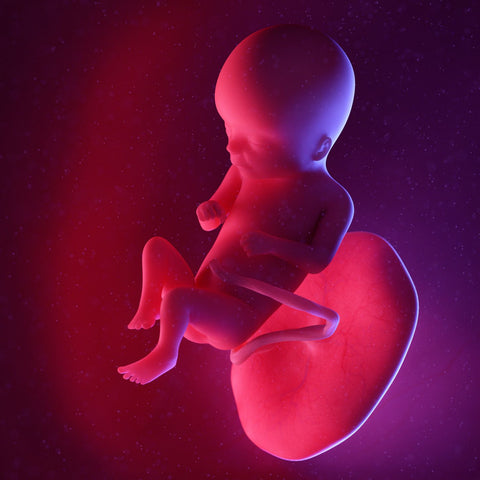
How is your baby growing at 16 weeks?
Your baby can move their arms and legs, and their hands can make fists. Their face is starting to make expressions, though these are random because they can’t control the muscles yet.
Your baby is about to have a growth spurt, and you may notice your bump getting bigger over the next few weeks.
Movements are usually first felt between 16 and 24 weeks. If this is your first baby, you may not notice them until after 20 weeks.
What happens at 16 weeks?
You’ll usually have an antenatal appointment at around 16 weeks. Your midwife will go through the results of your blood tests and any screening you chose. They’ll check your blood pressure and test your urine for protein, which can be a sign of pre-eclampsia. They may also listen to your baby’s heartbeat and offer a quick breath test for carbon monoxide.
They’ll talk to you about your 20-week scan too, which is usually between 18 and 21 weeks. How you book it varies by area, so ask if you’re not sure.
You can have the whooping cough vaccine from now, though it’s usually given at around 20 weeks. Ask your GP surgery or midwife.
What symptoms might you have at 16 weeks?
Constipation is common and can leave you bloated with tummy ache. Eating more fibre, drinking plenty of water and staying active can help. Iron tablets can make it worse, so if you take them, ask your midwife or GP for advice.
Headaches are common too. Paracetamol is the first choice of painkiller in pregnancy. Ask a pharmacist, midwife or GP how much to take, and avoid ibuprofen unless a doctor prescribes it.
You might also have bleeding gums, heartburn or leg cramps, or feel hotter than usual. Some people still have sickness at this stage.
If you have any bleeding from your vagina, call your midwife or early pregnancy unit straight away, or NHS 111 if you can’t reach them. Call 999 if it’s heavy or you also have severe tummy pain or feel faint. If any symptom is making daily life hard, talk to your midwife or GP.